

The Dog Wizard Announces Early-Intervention Training Guidance Following Research Showing Nearly Half of Puppies Develop Separation Anxiety by Six Months
The Dog Wizard, with 75 franchised locations nationwide, urges American owners to act early as peer-reviewed research reframes one of the most common — and most emotionally draining — dog behavior problems.
Medina, OHIO, April 29, 2026 (GLOBE NEWSWIRE) -- The Dog Wizard, a national dog training company with 75 franchised locations across the United States, announced new early-intervention training guidance in response to peer-reviewed research showing that 46.9% of puppies exhibit separation-related behaviors by six months of age. The announcement highlights the role of early-life training, routines, and owner behavior as primary factors associated with separation anxiety, reinforcing the importance of structured, reward-based approaches during a puppy’s first months.

The Dog Wizard's local dog training experts are experienced in treating separation anxiety.
New peer-reviewed research into the early lives of puppies has found that 46.9% of dogs displayed separation-related behaviors by six months of age, and that factors such as breed and sex showed no significant association with the problem. Instead, how much sleep a puppy receives, whether they sleep in an enclosed space, the use of reward-based versus correction-based training methods, the effectiveness of house training, the age of the owner, and how much owners fussed over their dog on reunion emerged as the dominant early-life risk factors.
Responding to the findings, The Dog Wizard, one of the nation's leading professional dog training organizations with 75 franchised locations across the United States, is urging American dog owners to treat the first six months of a puppy's life as the most important window for preventing separation anxiety — and to seek professional dog separation anxiety training at the first signs of trouble in older dogs.
Why This Matters for American Families
Among the many dog behavior problems, separation anxiety is consistently one of the most emotional and challenging for owners. It brings sleepless nights, neighbor complaints, and significant financial strain — from destroyed doors, furniture, and flooring to ongoing costs for daycare, dog walkers, and pet sitters. In severe cases, owners change jobs, withdraw from their own social lives, or, as a last resort, surrender their dog to a shelter. The research finding that the condition affects nearly half of all puppies by six months of age means this is not a rare problem — it is a mainstream welfare issue hiding in plain sight in American homes.
Breed Isn't the Biggest Risk — Early Experience Is
While some earlier studies of adult dogs have found certain breeds overrepresented in separation-related behavior, the latest research on early life found no significant association between breed or sex and the condition at six months. Even dogs from breeds often described as independent, tough, or working-oriented can still develop separation-related problems. Early-life environment, adverse experiences, attachment patterns, home routines, and training history all play a meaningful role — and these factors are particularly important in mixed-breed dogs. No breed is fully protected.
What the Research Means for American Dog Owners
The practical takeaway for U.S. families is that separation anxiety is largely preventable — and highly treatable — when the right expertise is brought in early. The research findings align closely with the approach The Dog Wizard has used across tens of thousands of cases: leading with reward-based methods, calm and predictable routines, structured sleep and rest, and professional guidance from puppyhood onward. For older dogs already showing signs, the same principles form the backbone of effective separation anxiety dog training.
"This research confirms what our trainers see every day — separation anxiety is not determined by the breed you chose; it is shaped by your dog's early experiences, especially in the first six months," said Grant Reeves, CEO of The Dog Wizard. "The good news is this is one of the most preventable and most treatable behavior problems we work with. Across 75 locations and thousands of cases every year, our teams are specifically developed to handle the hardest behavioral cases, the dogs other trainers turn away. What this study reinforces is how early, expert intervention can change the entire trajectory of a dog's life."
Signs Your Dog May Have Separation Anxiety
The Dog Wizard's local dog training experts advise owners to watch for these common warning signs:
- Barking, howling, or whining when left alone
- Destructive behavior, especially chewing, scratching, or damaging doors and furniture
- Indoor toileting in a dog that is otherwise house-trained
- Frantic pacing, restlessness, or repeated escape attempts
- Pre-departure anxiety, such as agitation when you pick up keys or get ready to leave
If any of these behaviors are present, a professional evaluation is recommended before the pattern becomes harder to change.
Five Evidence-Aligned Tips to Help Your Dog Feel Safe When Left Alone
- Start early and start calm. The first six months are the highest-impact window. Lead with reward-based methods and keep routines consistent. Research links heavy reliance on punishment to greater anxiety in dogs, not less, so praise and predictability pay long-term dividends.
- Protect sleep and rest. A well-rested puppy is a more resilient puppy. Emerging evidence points to nine or more hours of nightly sleep, in a crate or restricted to a room, as a meaningful protective factor.
- Keep reunions boring. Fussing over your dog the moment you walk through the door teaches them that your return is the emotional peak of their day — which makes the wait harder. Greet calmly, then engage.
- Practice short, unremarkable departures. Pick up your keys, put on your coat, or step outside briefly without actually leaving. This neutralizes the pre-departure cues that trigger anxiety. Dog socialization classes and dog training group classes also build the broader confidence dogs carry into time alone.
- Get a professional evaluation early. Separation anxiety tends to deepen with time. A free evaluation from The Dog Wizard's certified trainers can identify the underlying drivers and build a tailored, step-by-step plan.
About The Dog Wizard
The Dog Wizard operates 75 franchised locations across the United States, solving dog behavior problems either through private dog training delivered in one-on-one sessions or via dog training group classes, including structured dog socialization classes. Advanced programs — including agility mastery, scent training, therapy prep, and baby prep — help dogs thrive at every stage of life. Every new client is offered a free dog evaluation, and every graduate receives lifetime support, because real behavior change is a long-term commitment between dog, owner, and trainer.
To find your nearest location, learn more about separation anxiety dog training, or book a free evaluation, visit https://thedogwizard.com/.
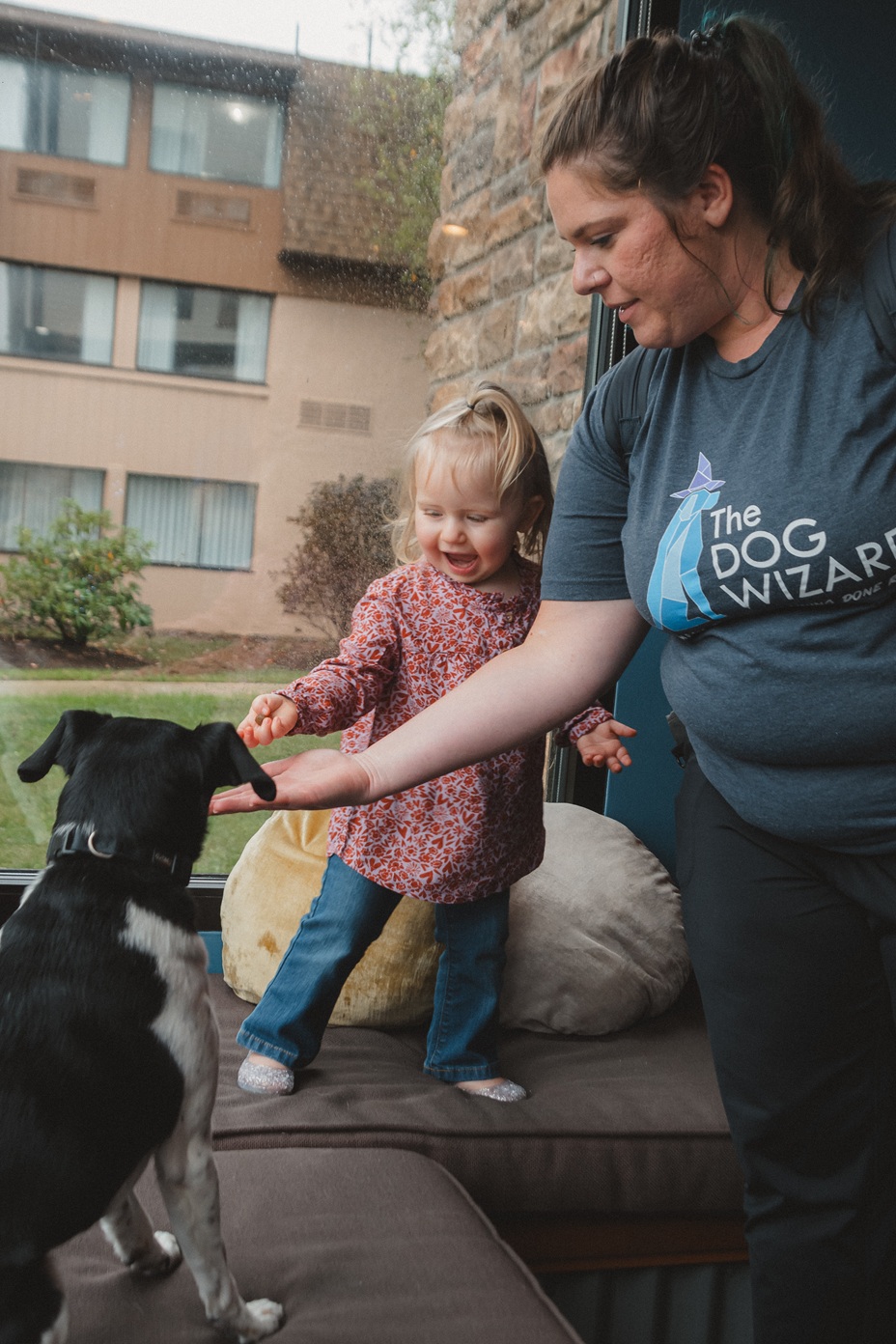
Dog Wizard's professional trainers help families manage the most challenging dog behavior problems.
Press Inquiries
Allan Edwards
allan [at] binarypr.co.uk
Tel: +44(0)7956 583080


Legal Disclaimer:
EIN Presswire provides this news content "as is" without warranty of any kind. We do not accept any responsibility or liability for the accuracy, content, images, videos, licenses, completeness, legality, or reliability of the information contained in this article. If you have any complaints or copyright issues related to this article, kindly contact the author above.
